Instant Calm Techniques Explained: Your Quick Stress Guide
U4RIA
Mindful Writer
Instant calm techniques are specific, evidence-based actions that reduce stress and anxiety within minutes by activating the parasympathetic nervous system. These are not vague suggestions to "breathe deeply" or "think positive." They are clinically studied methods — including controlled breathwork, sensory grounding, Progressive Muscle Relaxation, and mental imagery — each with a clear physiological mechanism. The parasympathetic nervous system is your body's built-in brake pedal. When you engage it deliberately, your heart rate drops, your muscles release tension, and your brain shifts out of threat mode. U4RIA's approach to wellness is built on exactly this science, making these tools accessible for anyone who needs relief right now.
What are instant calm techniques, and how do they work?
Instant calm techniques are defined as structured physical or mental actions that interrupt the stress response and restore physiological balance in under five minutes. The term "quick relaxation methods" is sometimes used interchangeably, but the clinical standard is autonomic regulation — meaning you are directly influencing your nervous system rather than simply distracting yourself.
The stress response is driven by the sympathetic nervous system, which floods your body with cortisol and adrenaline. Instant calm techniques counter this by stimulating the vagus nerve, the primary pathway of the parasympathetic system. Longer exhales, cold water on the face, and deliberate muscle tension and release all send a clear signal to the brain: the threat has passed.
The result is measurable. Your heart rate slows, your breathing deepens, and your prefrontal cortex — the part responsible for rational thinking — comes back online. That is why these techniques work even when you feel too anxious to think clearly.
How does breathwork provide instant calm?
Breathwork is the most studied and fastest-acting category of stress relief techniques. Dr. David Spiegel, a leading researcher in this field, emphasizes that longer exhales signal safety to the brain by directly regulating the autonomic nervous system. The exhale phase activates the vagus nerve more powerfully than the inhale, which is why extending it produces rapid calm.
Two techniques stand out for immediate use:
- Cyclic sighing (physiological sigh): Inhale fully through your nose, then take a second short inhale to fully inflate your lungs, then exhale slowly and completely through your mouth. Repeat for 1–5 minutes. A 2023 clinical trial found that five minutes of daily cyclic sighing improved mood and reduced anxiety over one month.
- Extended exhale breathing: Inhale for four seconds, then exhale for six to eight seconds. Repeat for ten breaths. A therapist-recommended variation of this pattern can reset your nervous system in under one minute.
Both techniques work because the exhale phase slows your heart rate through a process called respiratory sinus arrhythmia. Your heart rate naturally rises on the inhale and falls on the exhale. Deliberately lengthening the exhale amplifies that drop. Even one to five minutes of intentional breathwork produces measurable stress reduction. You do not need a quiet room or a meditation cushion — you can practice at your desk, in your car, or before a difficult conversation.
Pro Tip: Practice cyclic sighing during calm moments, not just stressful ones. Regular low-stakes practice trains your nervous system to reach a regulated state faster when real pressure hits.
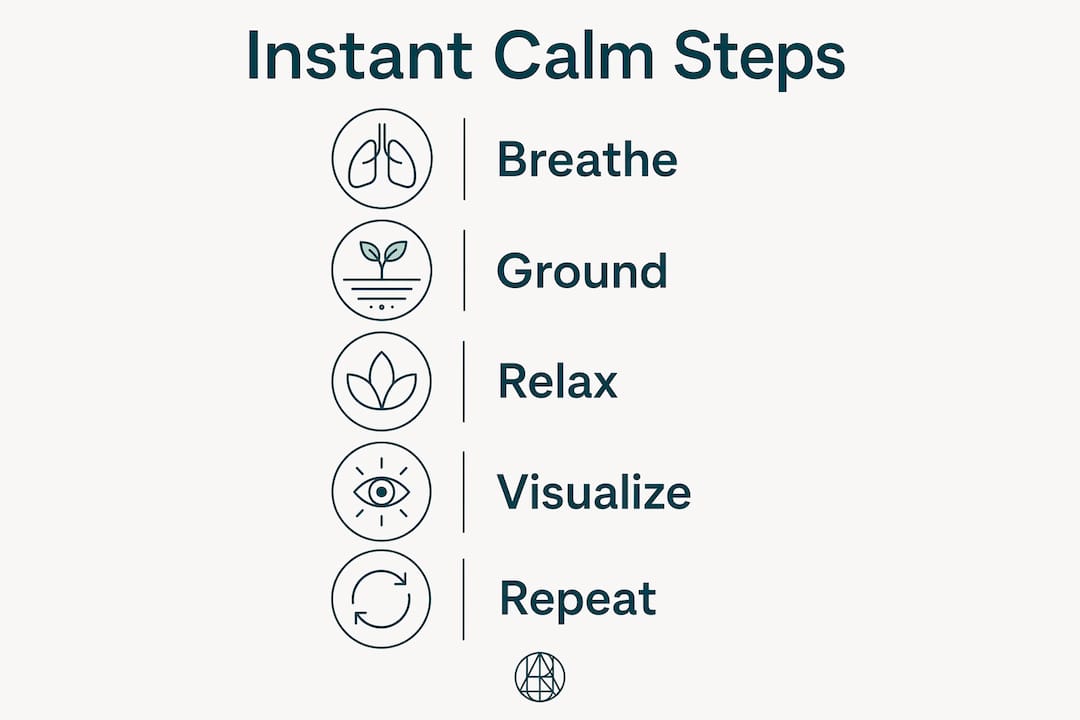
For a structured approach to short breathwork sessions, the 5-minute meditation guide from U4RIA offers practical formats designed for busy schedules.
What sensory grounding and cold water do for instant anxiety relief
Not every stressful moment allows for quiet breathing. Sensory grounding and thermal regulation offer fast, discreet alternatives that redirect your nervous system through physical sensation.
The two most effective methods are:
- 5-4-3-2-1 grounding: Name five things you can see, four you can touch, three you can hear, two you can smell, and one you can taste. This technique shifts attention away from racing thoughts by anchoring your awareness in the present moment. It works because anxiety lives in anticipation — grounding pulls you back to now.
- Cold water on the face: Splashing cold water on your face or submerging your face briefly in cold water triggers the mammalian diving reflex. This reflex slows your heart rate almost immediately and is one of the fastest physiological calming responses the human body has.
These methods are especially useful in public settings, during meetings, or when anxiety spikes without warning. They require no equipment and no explanation to anyone around you. Grounding techniques also work well alongside breathwork — starting with the 5-4-3-2-1 method to interrupt the anxious thought loop, then moving into extended exhale breathing, gives you both cognitive and physiological relief at the same time.
Pro Tip: Keep a small ice pack or cold gel mask in your freezer at home. Applying it to your face or wrists during a high-stress evening is a faster version of the diving reflex and works within seconds.
For a deeper look at body-based calming methods, this practical guide to breathing for acute anxiety covers the physiological mechanisms in detail.
How Progressive Muscle Relaxation and mental imagery interrupt stress
Active engagement is more effective than passive stillness for reducing anxiety. Remedy Psychiatry professionals confirm that Progressive Muscle Relaxation and mental visualization help the brain recognize relief and promote calm, rather than waiting for tension to fade on its own.
Progressive Muscle Relaxation (PMR) works by deliberately tensing and then releasing muscle groups in sequence. This contrast teaches the brain to recognize the difference between tension and relaxation, and signals that the body is safe.
- Start with your feet. Tense the muscles firmly for five seconds, then release completely for ten seconds.
- Move upward through your calves, thighs, abdomen, hands, arms, shoulders, and face.
- Complete the full sequence in eight to ten minutes, or focus on your shoulders and jaw for a two-minute version when time is short.
Multiple clinical studies confirm that regular PMR practice reduces anxiety, improves sleep quality, and increases overall calm. PMR done once helps. PMR done daily builds a measurable baseline of lower tension.
Mental imagery works differently but achieves a similar result. Visualizing a specific peaceful place — with sensory detail like the sound of water, the warmth of sunlight, or the texture of grass — activates the same neural pathways as actually being there. This is a recognized technique in clinical psychology for interrupting the stress response. PMR and imagery are particularly useful before sleep, during recovery from a difficult day, or in situations where physical movement is limited.
How to build instant calm techniques into your daily routine
Consistent practice is what separates a technique that works occasionally from one that works reliably under pressure. Regular breathwork during calm periods trains the nervous system to reach a regulated state faster when stress peaks. Think of it as conditioning, not just coping.
The CDC and Mayo Clinic both recommend pairing instant methods with lifestyle habits like exercise, sleep, and mindfulness for lasting stress control. Instant techniques handle the acute moment. Lifestyle habits lower your baseline stress so acute moments hit less hard.
| Timing | Recommended technique | Primary benefit |
|---|---|---|
| Morning | Cyclic sighing, 3–5 minutes | Sets a calm baseline for the day |
| Midday transitions | 5-4-3-2-1 grounding | Resets focus between tasks |
| Before sleep | Progressive Muscle Relaxation | Reduces physical tension for better sleep |
| Acute stress moments | Extended exhale breathing | Rapid nervous system regulation |
The most practical approach is to attach each technique to an existing habit. Practice cyclic sighing right after your morning coffee. Run through the 5-4-3-2-1 method before opening your email. Do a short PMR sequence as part of your wind-down routine. Habit stacking removes the barrier of remembering to practice.
For broader strategies on building lasting calm, U4RIA's guide on finding inner peace covers science-backed approaches that complement these daily techniques.
Key takeaways
The most effective stress relief strategy combines fast-acting techniques like breathwork and grounding with consistent daily practice that conditions the nervous system over time.
| Point | Details |
|---|---|
| Breathwork works fastest | Cyclic sighing and extended exhale breathing reduce stress in 1–5 minutes by activating the vagus nerve. |
| Grounding anchors the present | The 5-4-3-2-1 method and cold water interrupt anxious thought loops through immediate sensory input. |
| Active relaxation beats stillness | Progressive Muscle Relaxation and mental imagery engage the brain actively, producing faster relief than passive rest. |
| Daily practice builds resilience | Practicing techniques during calm periods trains the nervous system to respond faster under real pressure. |
| Lifestyle habits amplify results | Pairing instant techniques with sleep, exercise, and mindfulness creates lasting, not just temporary, stress control. |
What most people get wrong about achieving calm
The biggest misconception I see is that calm is a passive state — something you wait for rather than something you create. People sit still and hope the anxiety passes. It rarely does on its own. Every technique in this article requires you to do something: tense a muscle, name what you see, change your breathing pattern. That active engagement is the mechanism, not a side effect.
The second mistake is practicing only when stressed. That is like trying to learn to swim during a flood. The nervous system learns through repetition in low-stakes conditions. Five minutes of cyclic sighing on a Tuesday morning when you feel fine is what makes it work on a Friday afternoon when everything goes sideways.
The third pitfall is treating these techniques as a replacement for broader wellness habits. They are not. They are first-response tools. Combining them with consistent sleep, physical movement, and mindful awareness — as both the Mayo Clinic and U4RIA's approach confirm — is what produces durable change. Pick two techniques, practice them daily for two weeks, and notice what shifts. That is the experiment worth running.
— U4RIA
U4RIA gives you the tools to practice calm every day
Knowing a technique and having a structured way to practice it are two different things. U4RIA's guided breathing and meditation features put cyclic sighing, extended exhale sessions, and Progressive Muscle Relaxation sequences directly in your hands, with AI-personalized audio that adapts to what you need in the moment.
The SOS Wheel provides instant emotional support when stress spikes without warning. Over 150,000 people have downloaded U4RIA, and 92% report reduced anxiety after regular use. With a 4.9/5 rating on the App Store and plans starting at $4.99/month, structured calm practice has never been more accessible. The techniques in this article work. U4RIA makes sure you actually use them.
FAQ
What are the fastest instant calm techniques?
Cyclic sighing and extended exhale breathing are the fastest, producing measurable stress reduction in one to five minutes. Cold water on the face triggers the mammalian diving reflex and slows heart rate within seconds.
How does the 5-4-3-2-1 grounding technique work?
The 5-4-3-2-1 method redirects attention from anxious thoughts by engaging all five senses in sequence. It anchors awareness in the present moment, interrupting the anticipatory thinking that drives anxiety.
Is Progressive Muscle Relaxation effective for instant calm?
Clinical studies confirm PMR reduces anxiety and improves calm, though it takes eight to ten minutes for a full session. A shortened version focusing on the shoulders and jaw delivers relief in two minutes.
How often should I practice these techniques?
Daily practice during calm periods is the most effective approach. Regular repetition trains the nervous system to reach a regulated state faster when real stress occurs.
Can instant calm techniques replace therapy or medication?
Instant calm techniques are tools for acute stress management, not clinical treatment. The CDC and Mayo Clinic recommend using them alongside lifestyle habits like exercise and sleep, and in coordination with professional care when needed.
Comments (0)
No comments yet. Be the first to comment!