
Menopause Isn't a Diagnosis: Menopause Is Defined After 12 Months

U4RIA
Mindful Writer
"Manepause" is not a clinical term. It is shorthand people use for age-related hormone shifts in men, but the word that matters medically here is menopause, which is defined by the National Institute on Aging as the point a woman has gone 12 consecutive months without a period. Average age at natural menopause is around 52. The sections below walk through the stages, symptoms, testing, and treatment options that actually carry clinical weight.
TL;DR: Menopause is strictly diagnosed after 12 consecutive months without a period, and symptom timing varies from the early 40s to late 50s. Blood tests for hormone levels are rarely definitive but may be ordered under specific circumstances, especially for women under 45 or with ambiguous symptoms. The most effective treatment for hot flashes and vaginal dryness remains hormone therapy, though nonhormonal options and lifestyle changes can support symptom management. Postmenopause increases risks for osteoporosis and heart disease, emphasizing the importance of early screening and preventive measures starting in perimenopause. "Manepause" is an informal term for male hormone decline and is not a clinical diagnosis; confirming low testosterone requires blood testing.

Manepause vs. menopause: what the medical definition actually covers
Menopause has one diagnostic rule, and it is refreshingly simple: 12 consecutive months without a menstrual period, with no other cause explaining the gap. That threshold comes straight from the National Institute on Aging, and it is the line every clinician uses, whether you are 45 or 58 when you cross it.
"Manepause" gets tossed around online to describe fatigue, mood shifts, or low libido in middle-aged men, but it is not a diagnosis. Male hormone changes are real, and low testosterone is a legitimate clinical concern, but confirming it requires blood work, not a catchy label. A Mayo Clinic review of male hypogonadism notes that symptoms often overlap with sleep apnea, depression, thyroid disease, and normal aging, which is exactly why the term stays informal rather than diagnostic.
For women, the biology is more defined. Here is the quick physiology rundown:
- The ovaries gradually produce less estrogen and progesterone over years, not overnight.
- Follicle stimulating hormone (FSH) rises as the ovaries respond less to it, which is part of why doctors sometimes check it.
- Average age at natural menopause is around 52 in the U.S., though anywhere from the early 40s to late 50s counts as normal.
- Surgical removal of both ovaries triggers immediate menopause, regardless of age.
How do the stages of menopause actually progress?
Menopause is not a single event. It is a multi-year process with three distinct phases, and knowing which one you are in helps you make sense of what your body is doing.
- Perimenopause usually starts in the mid to late 40s and can last anywhere from a few months to over a decade. Irregular periods, early hot flashes, and sleep disruption are the calling cards here, driven by estrogen levels that swing rather than steadily decline.
- Menopause is the single day marker, confirmed retroactively once 12 full months pass without a period. Clinicians rarely need labs to confirm it. The calendar does the work.
- Postmenopause covers every year afterward. Hot flashes often fade within a few years for many women, but vaginal dryness, bone loss, and cardiovascular changes tend to persist or even accelerate.
The 12-month marker matters because it is retrospective. You cannot know you have hit menopause the day it happens. You only know it looking backward, which is part of why so many women feel confused about where exactly they stand.
What are the most common menopause symptoms?
Ask five different women about their symptoms and you will get five different lists, which is exactly what makes menopause frustrating to research on your own. The Mayo Clinic groups the most common effects into physical, emotional, and cognitive categories, and severity varies enormously from person to person.
- Hot flashes and night sweats: sudden heat waves, often followed by chills, that can last from a year to well over a decade.
- Sleep disruption: waking multiple times a night, often tied directly to night sweats but sometimes independent of them.
- Mood changes: irritability, anxiety, and low mood that can feel disproportionate to what is actually happening around you.
- Vaginal dryness: thinning vaginal tissue that can make sex uncomfortable and increase urinary tract infection risk.
- Libido changes: desire can drop, rise, or simply shift in what triggers it.
- Brain fog: trouble finding words, misplacing things, and a general sense that your mental sharpness has dulled.
Hot flashes and night sweats tend to improve over several years for most women. Vaginal dryness and genitourinary symptoms, on the other hand, often persist or worsen without treatment, because tissue changes do not reverse on their own the way vasomotor symptoms sometimes do.
Pro Tip: Keep a simple symptom log for two weeks before your next appointment. Note the time of day hot flashes hit, how long they last, and what you were doing right before. That pattern is often more useful to your clinician than a vague "it's been rough."
Certain symptoms are not part of the normal menopause script and deserve a same-week call to your doctor: unexpected bleeding after you thought you were done, severe depression that interferes with daily function, or chest pain that could signal a cardiac issue rather than a hot flash.
When do clinicians order hormone testing?
Menopause is diagnosed clinically, not with a single blood test. That surprises a lot of women who assume there is a definitive lab result waiting to confirm everything. In most cases, a detailed history of your cycle changes and symptoms tells your doctor what they need to know. Labs come into play in specific situations. Your clinician may order FSH, estradiol, TSH, or a pregnancy test when:
- You are under 45 and showing menopause symptoms, since early onset warrants ruling out other causes.
- Your symptoms are ambiguous and could point to a thyroid disorder instead.
- Pregnancy needs to be ruled out before assuming irregular bleeding is menopausal.
A single FSH reading can mislead, because hormone levels fluctuate throughout perimenopause. Research on hormone testing shows that combining clinical history with repeat testing, ideally with morning samples, reduces false positives compared to a lone out-of-range value. If your first result seems off from what your symptoms suggest, ask about repeat testing rather than accepting one number as the full picture.
What treatment options actually help manage symptoms?
Treatment for menopause is not one-size-fits-all, and the honest answer is that most women benefit from combining approaches rather than picking a single fix. Here is what the evidence supports.
Hormone therapy (HRT) remains the most effective option for hot flashes and vaginal dryness, according to The Menopause Society. It comes in pills, patches, gels, and vaginal preparations, and the right formulation depends on your symptoms, health history, and whether you still have a uterus. HRT is not right for everyone. Women with a history of certain cancers, blood clots, or uncontrolled cardiovascular disease usually need alternative approaches, and ongoing monitoring of blood pressure and breast health is part of the deal for anyone on it.
Nonhormonal medications fill the gap for women who cannot or prefer not to use HRT. Certain antidepressants at low doses can meaningfully reduce hot flash frequency. Gabapentin, typically used for nerve pain, also has evidence behind it for night sweats. Vaginal moisturizers and low-dose local estrogen address dryness without the systemic exposure of full HRT.
Lifestyle changes will not eliminate severe symptoms on their own, but they move the needle more than most people expect. Lifestyle research points to consistent sleep schedules, regular strength and cardio exercise, and weight management as measurable levers on symptom severity.
| Approach | Best for | Key consideration |
|---|---|---|
| Hormone therapy | Hot flashes, vaginal dryness, sleep disruption | Requires individualized risk counseling |
| Nonhormonal medication | Women who cannot use HRT | Targets specific symptoms, not all at once |
| Lifestyle changes | Overall symptom burden, long-term health | Works best combined with medical treatment |
What are the long-term health risks after menopause?
Menopause changes more than your monthly cycle. It shifts your risk profile for two of the biggest health concerns women face in later life, and screening timelines matter more than most people realize.
- Bone density: Estrogen protects bone, so its decline accelerates bone loss, raising osteoporosis risk. Womenshealth.gov recommends bone density screening starting around age 65 for most women, earlier if you have risk factors like a family history of fractures or low body weight. Weight-bearing exercise and adequate calcium and vitamin D intake help slow the loss.
- Cardiovascular risk: Heart disease risk rises after menopause, partly because estrogen had been offering some protective effect on blood vessels. Blood pressure checks, cholesterol monitoring, and regular cardio exercise become more important in your 50s and beyond.
- Genitourinary symptoms: Vulvovaginal atrophy — the thinning and drying of vaginal tissue — can cause pain, irritation, and recurring urinary tract infections. Local estrogen treatments and vaginal moisturizers treat this directly and tend to work well when used consistently.
None of these risks are inevitable disasters. They are predictable shifts that respond well to monitoring and early action, which is exactly why screening conversations belong in your regular checkups starting in perimenopause, not after a problem shows up.
When should you see a clinician, and what should you ask?
Certain signals mean it is time to book an appointment rather than wait it out: symptoms severe enough to disrupt work or sleep, any bleeding after 12 months without a period, persistent pain during sex, or mood changes that feel unmanageable. Walk into that appointment with a plan. Here is a short checklist to work through:
- Ask whether your symptoms and history support a clinical diagnosis, or whether hormone testing makes sense in your case.
- Request a bone density screening timeline based on your personal risk factors.
- Ask whether a cardiology or endocrinology referral is warranted given your family history.
- Get specific about HRT: ask what formulation fits your situation, what monitoring you will need, and what warning signs mean you should call between visits.
Bring your symptom log. A clinician working from real data, not a vague summary, can tailor recommendations far more precisely.
How mental wellness support fits alongside medical care
Stress and poor sleep make menopause symptoms worse, and the reverse is also true: better sleep and lower anxiety take some pressure off an already taxed system. Lifestyle-focused research backs this loop consistently. U4RIA was built for exactly this kind of support, not as a replacement for your doctor, but as a companion for the 2am wake-ups and the anxious mornings. Its SOS Wheel offers instant grounding when a hot flash or anxiety spike hits, sleep stories help with the disrupted nights menopause is famous for, and AI-personalized audio messages adjust to what you actually need that day.
Anxiety and depression: the emotional side nobody warns you about
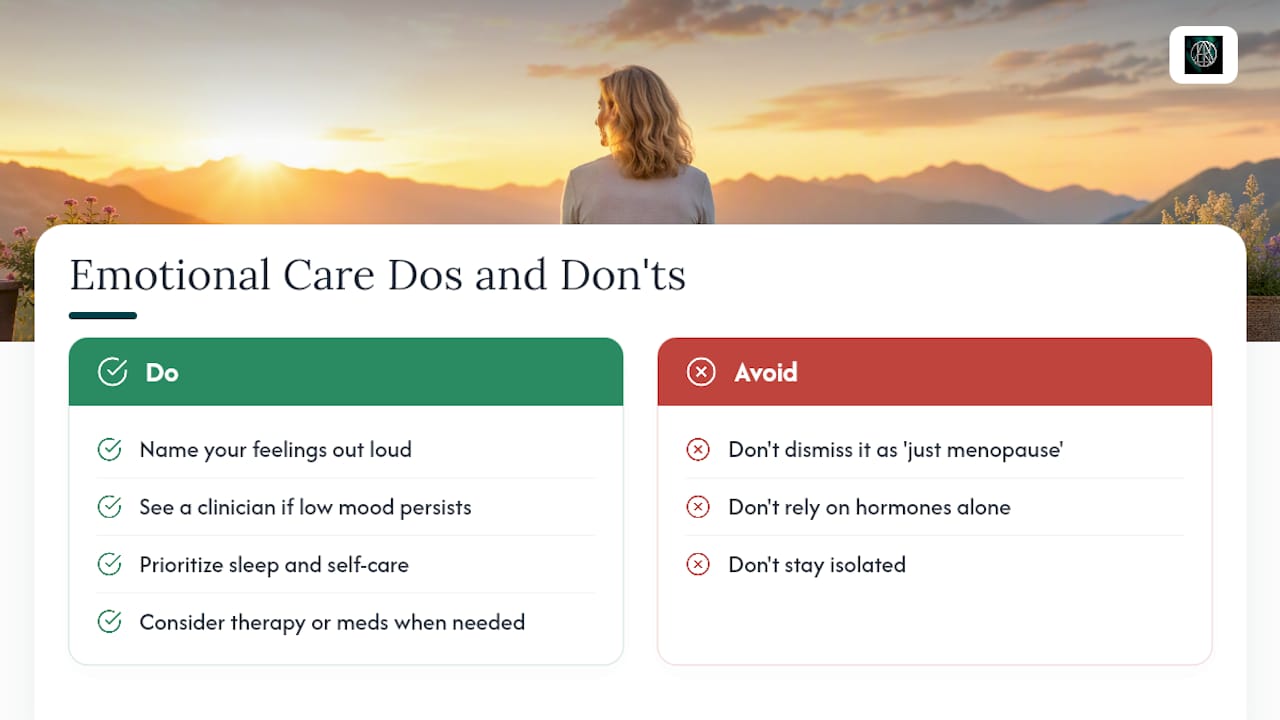
Mood swings get mentioned constantly in menopause conversations, but anxiety and depression deserve their own spotlight because they show up differently than a bad mood. Some women who never struggled with anxiety before suddenly find themselves rattled by things that used to roll off their back. Others notice a persistent low hum of dread they cannot quite explain.
Estrogen has a hand in regulating serotonin and other neurotransmitters tied to mood, so its decline during perimenopause and menopause can genuinely destabilize emotional baseline. Sleep loss compounds it. When you have been up three times a night sweating through the sheets, of course your emotional resilience takes a hit the next day.
Depression during this transition is not automatically "just menopause," and it should not be dismissed as something to simply push through. If low mood lasts most days for two weeks or longer, or if you notice loss of interest in things you used to enjoy, that crosses into territory worth discussing with a clinician, separate from a hot flash conversation. Hormone therapy sometimes helps mood indirectly by improving sleep and reducing physical discomfort, but it is not a substitute for treating clinical depression when that is what is happening.
The social piece matters too. Many women feel isolated during this stretch, partly because menopause still is not discussed openly at work or among friends the way it should be. Naming what you are feeling, out loud, to someone, tends to matter more than people expect.
Does menopause actually change your metabolism?
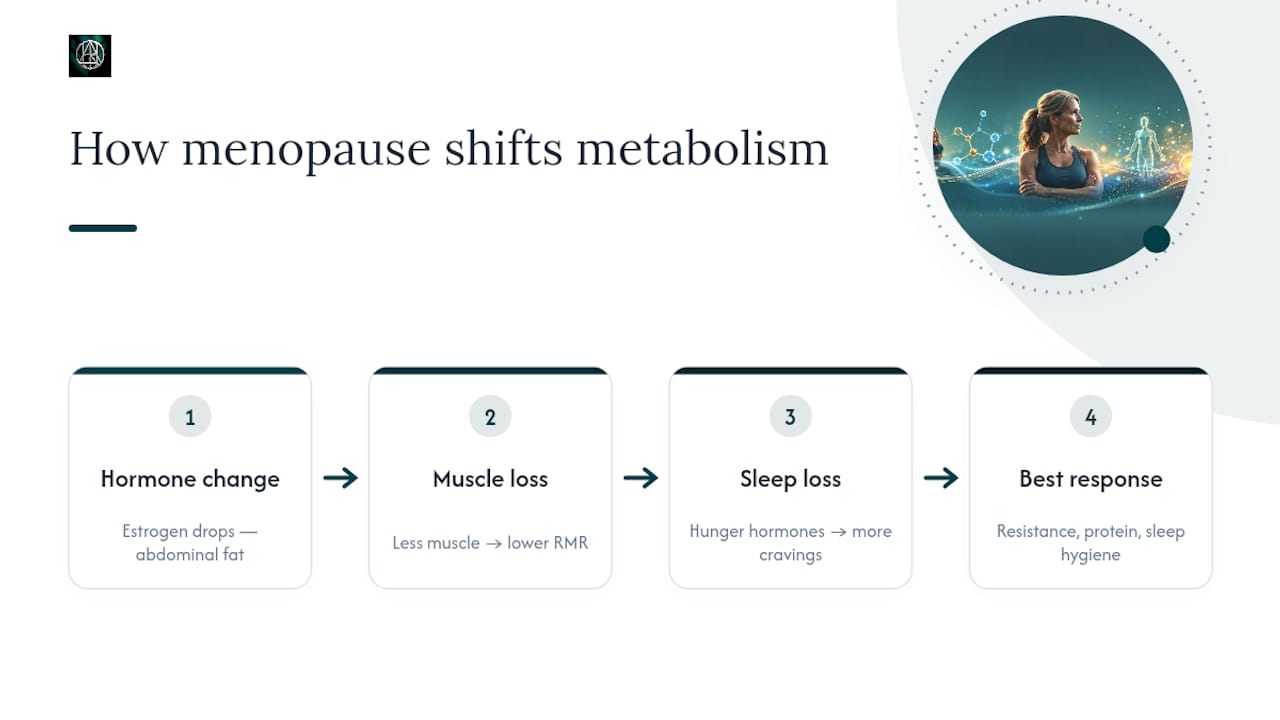
Yes, and this is one of the most common frustrations women bring up: the same eating and exercise habits that worked for years suddenly stop working the way they used to. Declining estrogen shifts where the body tends to store fat, often moving it toward the abdomen rather than the hips and thighs. Muscle mass also naturally declines with age, and less muscle means a lower resting metabolic rate, which compounds the shift.
None of this means weight gain is inevitable or that your metabolism has simply "broken." It means the math changes, and the strategies that worked in your 30s may need updating in your 50s. Strength training becomes especially valuable here, not just for bone density, but because muscle is metabolically active tissue that helps offset the natural slowdown.
Sleep disruption plays a sneaky role too. Poor sleep affects hunger hormones like leptin and ghrelin, which can increase cravings and make portion control genuinely harder, not just a willpower issue. Addressing sleep quality often has a bigger effect on weight management during this stage than people expect from a "sleep fix." Weight management during menopause works best as a combination approach: resistance training a few times a week, protein intake that supports muscle retention, and sleep hygiene that actually addresses night sweats rather than fighting through them.
Do acupuncture and herbal supplements actually work?
The evidence for complementary therapies is mixed, and it is worth being honest about that rather than overselling anything. Acupuncture has some support for reducing hot flash frequency in certain studies, though results are inconsistent enough that major clinical bodies stop short of recommending it as a primary treatment. It is generally low risk when performed by a licensed practitioner, which makes it a reasonable option to try if HRT is not right for you.
Herbal supplements are trickier territory. Black cohosh is probably the most widely used, and while some women report symptom relief, clinical trial results have been inconsistent, and supplement quality varies wildly since these products are not regulated the way medications are. Soy isoflavones and red clover show modest, inconsistent effects on hot flashes in research, nowhere near the reliability of hormone therapy.
The bigger issue with supplements is interaction risk. Some can affect liver enzymes or interact with medications you are already taking, so mentioning any supplement to your doctor is not optional caution, it is basic safety. If you are drawn to a complementary approach, treat it as an addition to a conversation with your clinician, not a private workaround you keep to yourself.
How does menopause differ across cultures and communities?
Menopause is a universal biological process, but how it is experienced and talked about varies enormously depending on where and how you were raised. Some cultures treat this transition as a milestone worth marking, with menopause associated with increased social status or freedom rather than decline. Other cultural contexts treat it as something to hide entirely, which tends to correlate with women reporting more distress about symptoms, not necessarily worse biology, just less support and more shame around discussing it.
Diet also plays into symptom experience. Populations with diets higher in soy and phytoestrogens report somewhat lower hot flash frequency in some research, though genetics and overall health patterns muddy that picture considerably. Access to care matters just as much as culture. Women without consistent healthcare access are far less likely to get HRT, bone density screening, or even a clear explanation of what is happening to their bodies, regardless of what their culture believes about the transition itself.
None of this changes the underlying physiology. Estrogen decline and its downstream effects happen the same way across populations. What changes is the support system around it, and that gap is worth naming honestly rather than assuming everyone's experience matches whatever narrative is most common in your own circle.
Surgical menopause vs. natural menopause: what's actually different?
Natural menopause unfolds gradually over years, giving the body time to adjust as hormone levels decline in fits and starts throughout perimenopause. Surgical menopause, which happens when both ovaries are removed (often during a hysterectomy with oophorectomy), is a hard stop. Estrogen production drops essentially overnight rather than tapering off.
That abruptness tends to make symptoms more intense. Women who undergo surgical menopause often report more severe hot flashes, sharper mood changes, and a rockier adjustment period compared to those going through the transition naturally, simply because there is no gradual ramp for the body to adapt to.
Age at the time of surgery matters enormously too. A woman who has surgical menopause in her 30s or early 40s faces a longer stretch of years without natural estrogen than someone who reaches natural menopause at 52, which raises the stakes on bone and cardiovascular protection even further. For this reason, HRT is often discussed more urgently after surgical menopause, particularly in younger women, since the benefits of replacing hormones typically outweigh the risks for a longer window.
The transition deserves honesty, not just endurance
Menopause gets treated like something to grit your teeth through quietly, and that framing does women a disservice. The research is clear that combination approaches, medical treatment paired with sleep support, movement, and stress management, consistently outperform any single fix on its own. Seeking care is not overreacting. It is the informed move. Whether that means starting a conversation about HRT or simply building better sleep habits, evidence-backed options exist, and you do not have to figure this out solo.
— U4RIA
A complementary tool for the nights menopause makes hard
U4RIA is not a replacement for your doctor or your HRT prescription. It is the tool that sits next to that care, built specifically for the anxious 2am wake-ups and restless nights that hot flashes and hormone swings tend to trigger. The SOS Wheel gives you instant grounding when a symptom flare or anxious spiral hits without warning. Sleep stories and guided meditations help rebuild a bedtime routine that night sweats keep wrecking. AI-personalized audio messages adjust to whatever state you're actually in that day, rather than offering a generic script.

If you want a complementary layer of support alongside your medical care, check out the Water, Air, and Earth plans starting at $4.99 per month and see which one fits your routine.
Sources
- What Is Menopause? | National Institute on Aging - NIH
- Menopause: What It Is, Age, Stages, Signs & Side Effects | Cleveland Clinic
FAQ
What are five common symptoms of menopause?
Hot flashes, night sweats, sleep disruption, mood changes, and vaginal dryness are among the most frequently reported symptoms, according to Mayo Clinic. Brain fog and libido changes round out the list for many women, though severity varies widely.
What age is menopause usually hardest to manage?
Symptoms often peak during late perimenopause and the first year or two after the final period, roughly the late 40s to mid 50s for most women. Average age at natural menopause is around 52, and hormone fluctuation tends to be most disruptive right around that transition point.
What is the main cause of menopause?
Menopause happens because the ovaries gradually stop producing estrogen and progesterone as egg supply naturally depletes with age. It is confirmed once 12 consecutive months pass without a period, though surgery, chemotherapy, or certain medical conditions can trigger it earlier.
What should you avoid during menopause?
Avoid ignoring severe symptoms, unexplained bleeding, or persistent depression as things to just push through, since these warrant a clinician visit. It also helps to avoid unregulated supplements without discussing them with your doctor first, given inconsistent evidence and potential medication interactions.
Is "manepause" a real medical condition?
No, "manepause" is an informal term, not a clinical diagnosis. It loosely describes age-related symptoms in men that may relate to declining testosterone, but confirming true hormonal imbalance requires blood testing rather than symptom matching alone, as outlined in Mayo Clinic's review of male hypogonadism.
Comments (0)
No comments yet. Be the first to comment!