
Try Tonight: 5, 10 and 20 Minute Guided Sleep Meditations for Beginners

U4RIA
Mindful Writer
Guided sleep meditation works by walking your nervous system down from "wired" to "drowsy," using a narrator's voice to redirect attention away from racing thoughts. Research backs it up for perceived sleep quality and insomnia symptoms, but it is not a switch that guarantees more hours of sleep. The realistic move: pick a short track tonight, pair it with a few basic wind-down habits recommended by sleep experts, and treat it as one tool in a bigger sleep routine.
TL;DR: Guided sleep meditation improves perceived sleep quality but does not reliably increase total sleep hours unless combined with good sleep hygiene. Short practices like five-minute breathing exercises or muscle releases work well for quick relaxation, while longer sessions suit nights with more restlessness. Use a cool, dark, quiet environment and set a sleep timer to avoid sleep fragmentation from continuous audio. Test new tracks for three nights before judging them. Meditation is a helpful sleep aid for occasional issues but should not replace clinical treatment for persistent insomnia.

What are the best guided sleep meditations to try tonight?
You don't need forty-five minutes of chanting to get results. Three formats cover almost every situation a tired brain throws at you, and each one targets a different flavor of nighttime restlessness.
- The 5-minute wind-down (breath count or muscle release). This is for the "I just need to stop scrolling and pass out" moment. A typical structure spends a minute settling into the body, two minutes on slow paced breathing (inhaling and exhaling over four to six seconds each), a minute releasing tension from head to toe, and a final minute settling into ambient sound. It's short enough that even skeptics finish it.
- The 10-minute body scan or visualization. This works by shifting attention systematically, forehead, jaw, shoulders, chest, all the way to your toes, which gives your brain a task simple enough to be boring but specific enough to crowd out worry loops. Visualization tracks (walking a quiet beach, floating on water) do something similar by replacing anxious mental chatter with one calm, low-stakes image.
- The 20-minute Yoga Nidra or sleep story. These are intentionally non-goal-oriented. Unlike the shorter practices, there's no clear finish line, which is the point. Some of the better sleep-story scripts skip an explicit wake-up cue at the end and just let the narration trail off, so if you drift off mid-track, you're not jolted by a "now open your eyes" moment.
A note on narrator tone: a flat, slow, low-pitched voice tends to outperform anything peppy or overly theatrical. If a track keeps pulling your attention back to the words instead of letting them fade into background noise, it's the wrong track for you, not a personal failure. Set a sleep timer for 20 to 30 minutes rather than looping all night. A voice or soundscape running for hours can fragment sleep just as easily as a bright phone screen.
How do you use guided sleep meditations effectively?
Timing and environment do more heavy lifting than most people expect, often more than which app or voice you choose. The CDC and NIOSH recommend starting a wind-down routine roughly 1.5 hours before bed, which gives your body enough runway to actually shift gears instead of demanding it happen in ninety seconds flat.
A few setup details matter more than people assume:
- Keep the room cool, dark, and quiet. Meditation can't out-compete a bright ceiling light or a partner's television.
- Play audio only, screen off, and use a sleep timer so a notification doesn't undo ten minutes of calm.
- Lie down in whatever position you'd normally sleep in. Sitting cross-legged for a bedtime track just tells your brain "we are not done yet."
- Never do a guided relaxation track while driving or operating anything that needs your full attention. Save it for the couch or the bed.
- Anchor the practice to a consistent sleep-wake schedule, and trim caffeine and screen time in the evening, both flagged as sleep-hygiene basics by CDC guidance.
If you're doing this with kids in the house, the setup gets a bit more logistical. A parent's guide to guided relaxation for children has practical tips on keeping a short practice quiet enough not to wake a sleeping toddler down the hall.
Pro Tip: Test a new track for three nights in a row before judging it. The first listen is often just your brain learning the narrator's cadence. By night three, you'll know if it actually relaxes you or just becomes background noise you tune out.
Does the research actually support guided sleep meditation?
Yes, with a real asterisk. A 2019 systematic review and meta-analysis covering 49 studies and 4,506 participants found mind-body therapies, meditation included, consistently improved how people rated their sleep quality and reduced insomnia severity. That's a meaningful result. What it didn't show cleanly was a reliable bump in total sleep time. You may feel like you slept better without necessarily logging more hours on a tracker.
A separate 2018 review of 18 randomized trials with 1,654 participants adds useful nuance: mindfulness meditation beat "do nothing" control groups, but showed weaker or no advantage once compared against other structured active treatments. In plain terms, meditation clearly beats scrolling your phone in the dark. It's a less certain bet against something like cognitive behavioral therapy for insomnia (CBT-I), which remains the evidence-based first-line treatment for chronic insomnia.
The honest takeaway from the research: guided meditation is a strong, low-risk piece of sleep hygiene. It is not a replacement for clinical treatment if insomnia has been dragging on for weeks or months.
If your sleep trouble is occasional, stress-driven, or tied to a busy season of life, a short nightly practice is a genuinely useful lever. If you've had trouble falling or staying asleep most nights for three months or longer, that's the point to loop in a clinician rather than expecting an audio track to solve it alone.
Why U4RIA fits into your bedtime routine
U4RIA was built around the idea that relief shouldn't require a fifteen-step onboarding process at 11 p.m. when you're already exhausted. Inside the app, you'll find guided meditations, sleep stories, breathing exercises, and AI-personalized audio messages that adjust to what you're actually feeling that night, plus built-in sleep timers so a track doesn't run all night uninvited. If anxiety spikes right before bed, the SOS Wheel gives you instant, in-the-moment support instead of making you dig through menus.
U4RIA has over 150,000 downloads and a 4.9 out of 5 rating on the App Store, and 92% of users report reduced anxiety after using it. Tonight's version of "trying guided sleep meditation" can be this simple: open the app, pick a 5 or 10-minute track, set the timer, and let your evening wind-down actually start.

Why beginners quit before guided meditation even works
The most common obstacle isn't the meditation itself, it's impatience. New listeners expect to feel drowsy by minute two and give up when their mind keeps wandering to tomorrow's to-do list. Wandering attention is normal, not a sign you're doing it wrong. The practice is noticing the wandering and gently returning, not achieving total mental silence on the first try.
A second obstacle is track mismatch. Someone grabs a random 20-minute Yoga Nidra session on a night they're wired and jittery, and it feels tedious rather than calming, so they conclude "meditation doesn't work for me." Matching the format to your actual state solves most of that: a 5-minute breath count when you're anxious and alert, a longer visualization when you're already fairly relaxed.
A third is inconsistency. People try one track once, judge it against a single night's sleep, and quit. Sleep is noisy data; one bad night proves very little. Give any new practice three to five nights before deciding whether it earns a permanent spot in your routine. Finally, device friction trips people up: notifications interrupting a track, screens staying lit, no timer set so the audio runs for hours. Fixing the setup usually fixes the frustration.

What happened when I actually tried this
I tested a 10-minute body scan on a night when my brain wouldn't stop replaying an email I probably should have worded differently. I dimmed the lights, set a 20-minute sleep timer, and lay flat instead of propped up on pillows like I normally read in. I didn't fall asleep during the track, but I fell asleep faster than usual once it ended. Track your own subjective sleep quality on a simple 1 to 5 scale for a few nights before deciding whether a practice is actually helping.
— U4RIA
Ready to try guided sleep meditation tonight?
U4RIA gives you the full toolkit in one place instead of forcing you to piece together a breathing app, a separate sleep-story podcast, and a white-noise machine. Guided meditations, sleep stories, AI-personalized audio, the SOS Wheel for sudden anxiety spikes, and built-in sleep timers all live inside the same app, so your wind-down routine doesn't require five different logins at 11 p.m.
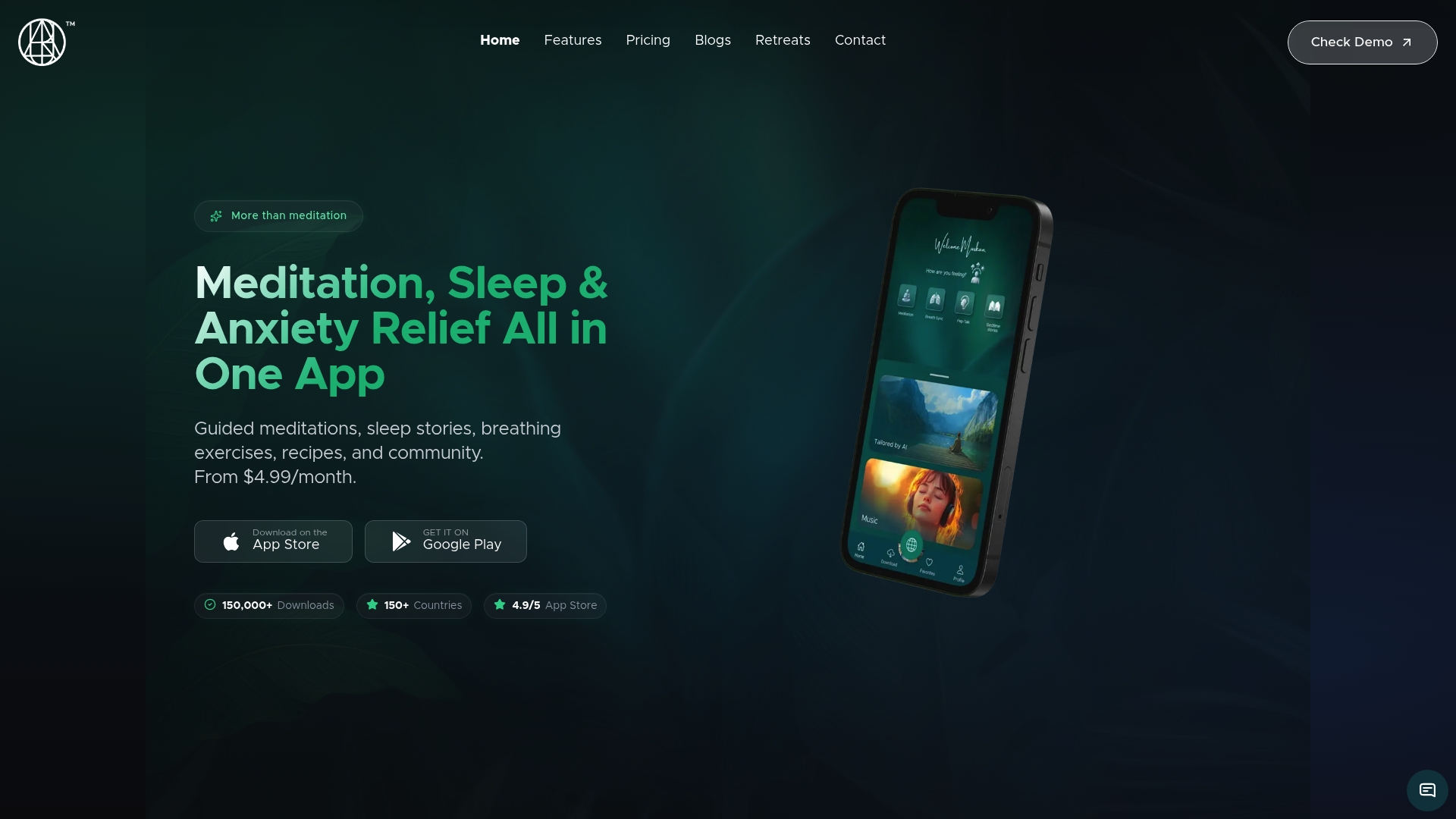
Getting started takes about as long as brushing your teeth. Download the app, browse the pricing plans starting with Water at $4.99 per month, and pick one short track tonight — five minutes if you're wired, ten if you're already fairly settled. If you manage a team that could use the same support, the organization plan at $59.88 per year per employee brings the same tools to a workplace setting. Either way, the next step is simple: open the app, hit play, and let the wind-down actually begin.
Sources
- The Effect of Mind-Body Therapies on Insomnia: A Systematic Review and Meta-Analysis
- The effect of mindfulness meditation on sleep quality: a systematic review and meta-analysis of randomized controlled trials
- Improve Sleep: Tips to Improve Your Sleep When Times Are Tough | NIOSH | CDC
This article is general information, not a substitute for advice from a qualified doctor. Consult a qualified healthcare professional about your own circumstances before acting on anything here.
FAQ
What are the best guided meditations for sleep?
The best options depend on how wired you feel: a 5-minute breathing or muscle-release practice works well for racing thoughts, a 10-minute body scan suits general restlessness, and a 20-minute Yoga Nidra or sleep story fits nights when you want to drift off slowly. U4RIA offers all three formats along with AI-personalized audio that adjusts to your mood that night.
Is it good to listen to guided meditation while sleeping?
Falling asleep mid-track is fine, but leaving audio running all night can fragment sleep the same way a bright screen would. Set a sleep timer for 20 to 30 minutes so the track fades out naturally instead of playing for hours.
What is a good 5-minute sleep meditation to fall asleep fast?
A solid 5-minute structure spends about a minute settling into the body, two minutes on slow paced breathing, a minute releasing tension head to toe, and a final minute resting with quiet ambient sound. It's short enough to finish even on nights when patience is thin.
How do you calm the brain to fall asleep?
Start a wind-down routine about 1.5 hours before bed, dim the lights, and use a short guided meditation to redirect attention away from looping thoughts. Pairing that with a cool, dark, quiet room and a consistent sleep schedule does more than any single track alone.
Comments (0)
No comments yet. Be the first to comment!